
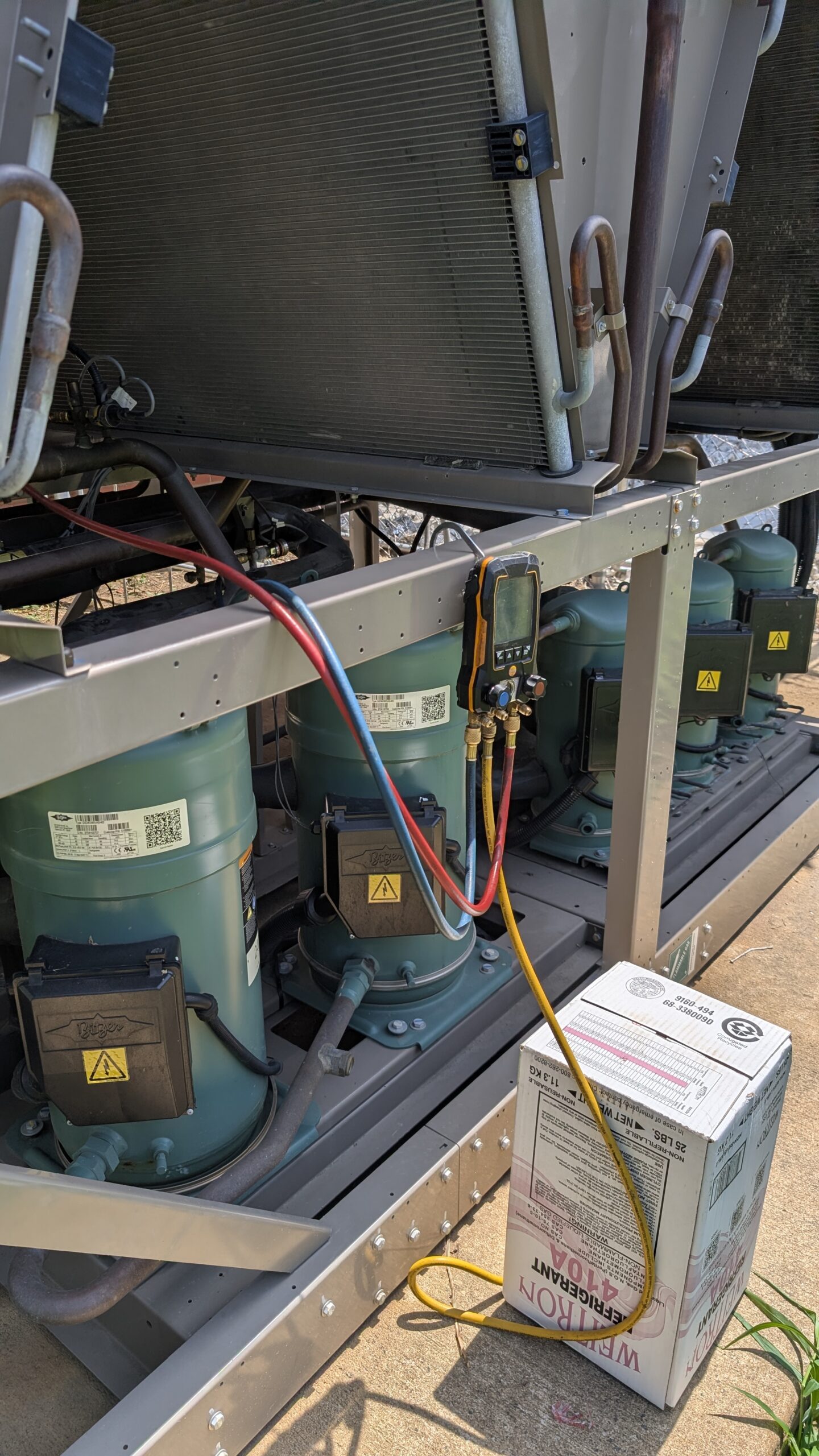

If you’re new to HVAC, or coming back after a few years away, the refrigerant rules can feel like they change every six months. In 2026, they kind of did. Here’s where things actually stand, and what it means when you’re standing in front of a unit.
Where the rules stand right now
The short version: new equipment is A2L, and old R-410A equipment can still go in until it’s gone.
As of January 1, 2025, manufacturers can no longer build R-410A residential and light commercial split systems. That part is settled and isn’t coming back.
The original rules also had a January 1, 2026 deadline to stop installing leftover R-410A equipment. In May 2026, EPA finalized a rule that removed that deadline. It took effect July 27, 2026. Equipment built or imported before 2025 can now be installed until existing supply runs out.
Two big exceptions:
- New York kept its own January 1, 2026 install deadline under state law. The federal change doesn’t apply there.
- Some other states, including Washington, have their own HFC rules that still apply.
VRF systems run on a separate schedule. The 2026 rule did not give VRF relief from its January 1, 2027 installation deadline.
And the market already moved. According to the manufacturers’ trade group, over 90% of new residential and light commercial equipment already uses next-generation refrigerants. So even with the deadline gone, most new systems you install will be A2L.
Studying for your EPA 608? These rules are exactly what the exam tests. Get the free study guide at hvacwithjb.com/free-guide.
What makes an A2L different
A2L is a safety class from ASHRAE Standard 34. The “2L” means mildly flammable with a low burning velocity. The two you’ll see most are R-454B and R-32.
Mildly flammable doesn’t mean dangerous to work on. It means the equipment, the tools, and your habits have to account for it. That’s why new A2L systems come with safety features older R-410A units never had, like built-in refrigerant leak sensors on many models.
Here’s the part people get wrong: you cannot convert an R-410A system to an A2L, or an A2L system to R-410A. Different pressure-temperature behavior, different components, different safety design. There is no drop-in. Anyone telling you otherwise is guessing.
Never mix refrigerants
During the R-454B shortage in 2025, some techs got desperate and charged A2L systems with R-410A. The result was high pressures, no cooling, and a much bigger repair bill. Building code officials now flag mixing and changing refrigerants as one of the most critical problems of this transition.
The rule is simple. Read the nameplate. Charge only what it says. If you don’t have the right refrigerant on the truck, the job waits.
The tools you need for A2L work
If your tool bag was built for R-410A, check it before your first A2L call:
- Recovery machine and manifold rated for A2L. Spark-free design matters here. Older machines may not be rated.
- A2L recovery cylinders. A2L cylinders use left-hand threads so they can’t be confused with standard cylinders.
- A leak detector certified for A2L refrigerants. Heated diode, infrared, or ultrasonic detectors are the common types.
- Labeling. Code officials are pushing for clear refrigerant pipe labeling so nobody opens the wrong line by mistake. Label your work.
What this means for R-410A service work
There’s a huge installed base of R-410A systems still running, and they’ll need service for years. Right now supply is healthy. But production keeps stepping down under the federal phasedown, and industry reporting says future R-410A service will depend more and more on recovered and reclaimed refrigerant.
That makes recovery a bigger deal than it used to be. Every pound you recover properly is a pound that can go back into service.
Your EPA 608 still matters, maybe more than ever
None of this changes the basic requirement: you need EPA Section 608 certification to handle refrigerants, including A2Ls. The transition actually makes the knowledge behind the 608 more important. Recovery, leak repair, and refrigerant handling rules are exactly what the exam covers, and exactly what’s changing in the field.
Where to go from here
Everything in this article comes back to one thing: knowing how to handle refrigerant safely and legally. Pick the path that fits you:
- Just need your EPA 608? Start with the free study guide, then work through our EPA 608 study guide.
- Want to get hired, not just certified? The 6-week HVAC program includes EPA 608 prep, OSHA 10, and 190 hours of training. Same cert, plus the skills employers look for.
- Already working and want to move up? See every program at hvacwithjb.com.
More at hvacwithjb.com